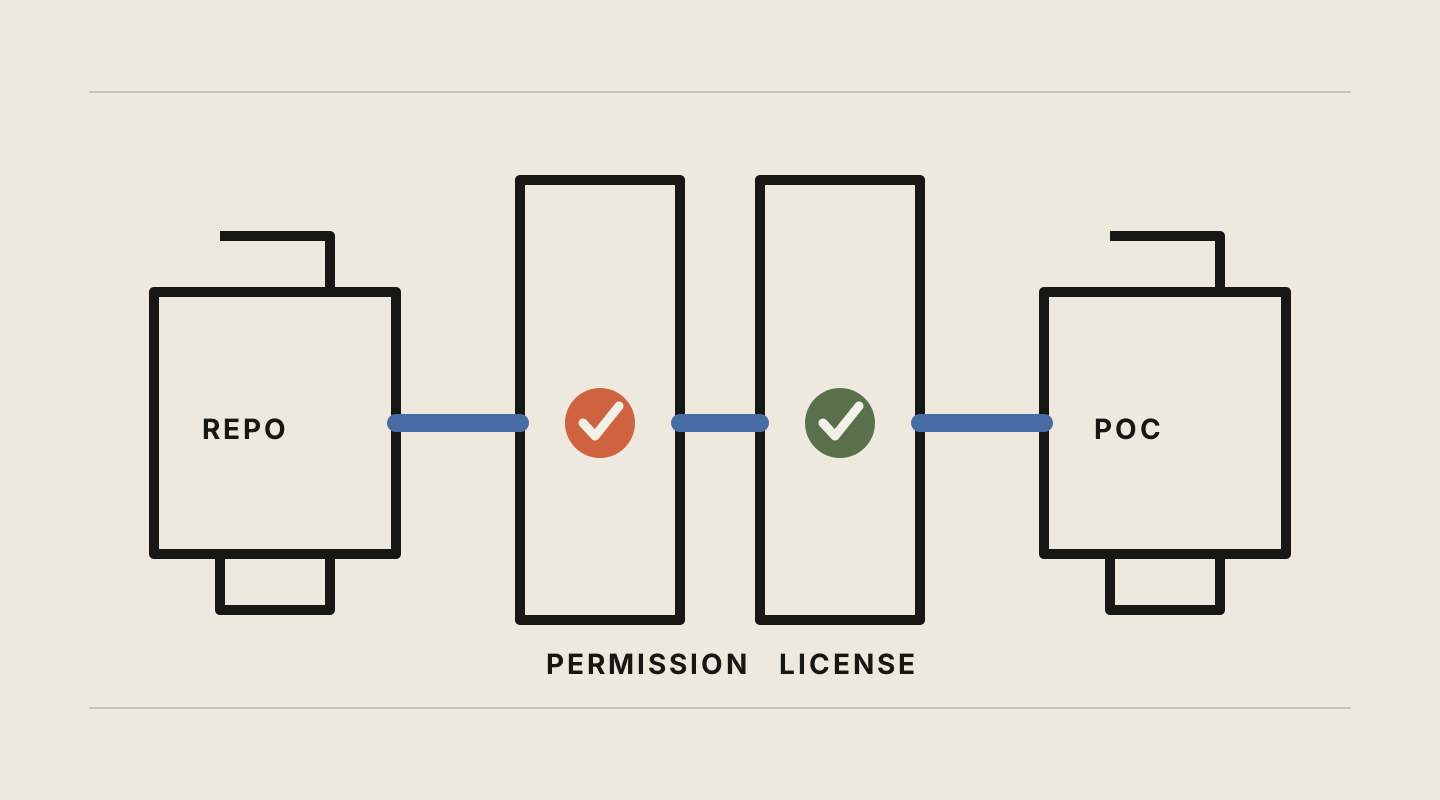
Open source describes access to code. It does not automatically grant unrestricted usage rights, and it does not guarantee secure software. AI tools often blur these into one vague question: can the repository be trusted?
Gate one: permissions and threat model
openai/codex-security is a useful reference for security workflows around coding agents. Its name, stars, and scans do not replace identifying the assets, attackers, permissions, secrets, network paths, and actions available to the agent.
A security tool becomes a control only when the team knows what it detects, what it misses, where it runs, who reviews the result, and what happens when it fails.
Gate two: licensing and provenance
MoonshotAI/Kimi-K3 drew attention with claims of 2.8 trillion parameters and a 1M-token context window, while the July 31 GitHub snapshot showed NOASSERTION in the license field. GitHub’s licensing guidance explains that default copyright rules apply when a repository has no clear license.
Public weights or code are therefore not enough for commercial use. The team must verify the license file, model card, weight provenance, dependencies, redistribution rights, and attribution duties before introducing the repository into a product environment.
The PoC promotion checklist
- a security owner approves the permission boundary and threat model;
- a legal or compliance owner approves the license and intended use;
- the commit, release, or weights are pinned with a checksum;
- test data are non-sensitive and credentials are removed;
- rollback criteria are written before execution.
Action this week
Choose one AI repository under consideration. Write a one-page intake covering required permissions, reachable secrets, licensing, provenance, and stop conditions. If any field lacks an owner, the repository is not ready for a PoC.