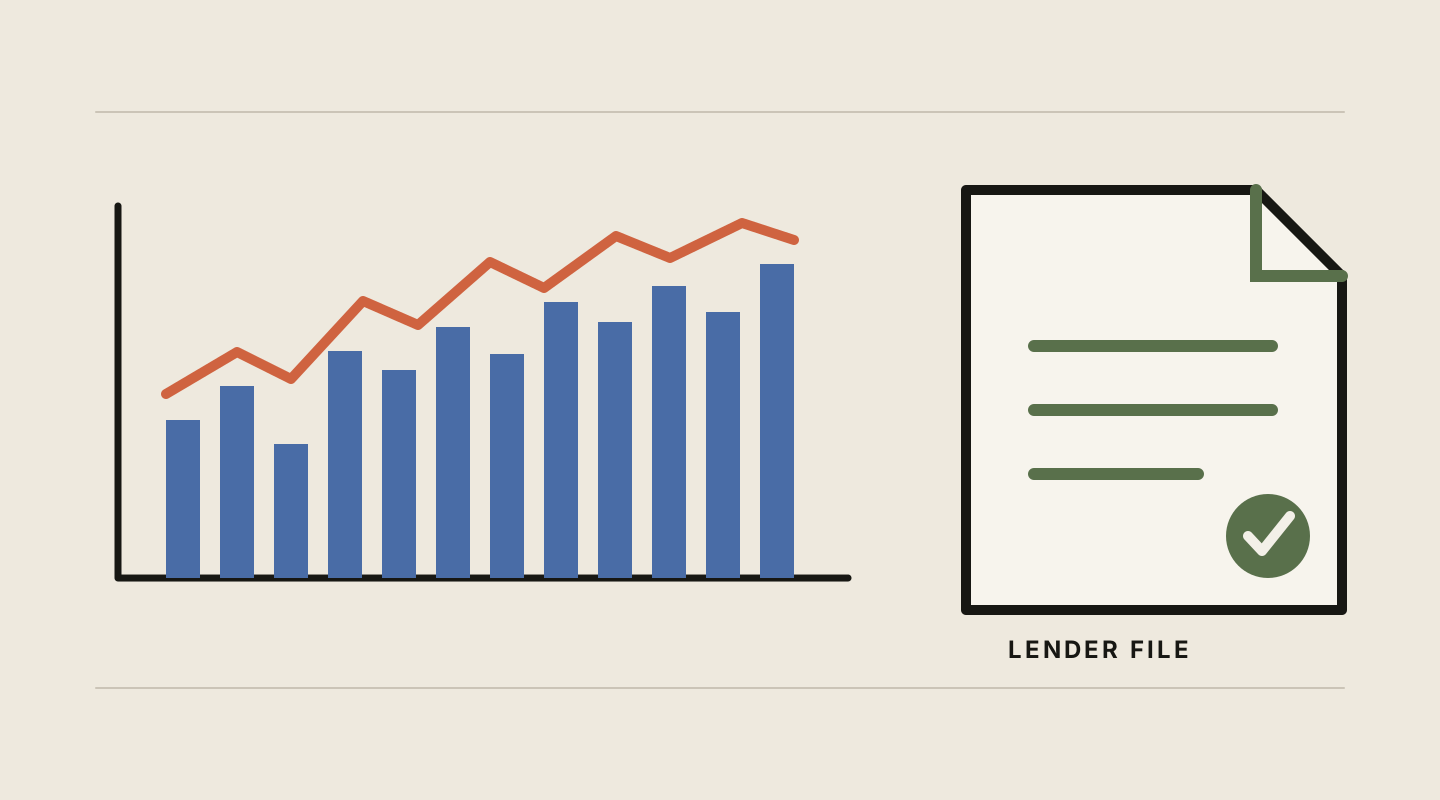
A useful lender pack does more than state revenue. It explains how cash moves through the business, how receivables turn, how much capital inventory holds, and why cash can diverge from accounting profit.
A policy signal is changing the direction
Vietnam News reported that Vietnam’s Ministry of Finance is proposing an SME lending sandbox using transaction data, cash flow, business performance, and value-chain position instead of relying mainly on collateral. SMEs represent about 95% of businesses but receive roughly 19-20% of total credit.
Vietnam Investment Review also describes deposit-cost, capital, and asset-quality pressure that makes loan-rate cuts uneven. A company with clean cash-flow data and a credible credit story should negotiate from a stronger position than one waiting for market rates to fall.
The minimum lender pack
Standardize 12 months of:
- revenue by customer and collection date;
- receivables aging, payables, and overdue history;
- inventory, turns, and working-capital gaps;
- payroll, taxes, debt, and fixed obligations;
- bank cash movement reconciled with the books.
Every number needs a source, update date, and owner. A polished file that cannot explain its differences is weaker than a simple pack that can.
What the evidence does not prove
The sandbox is not an enacted lending regime. An interbank rate reflects bank-to-bank liquidity, not the rate a particular SME will receive.
Action this week
Close a 12-month lender pack, mark every reconciliation gap, and write a one-page credit story covering the business model, working-capital cycle, repayment history, and use of funds.