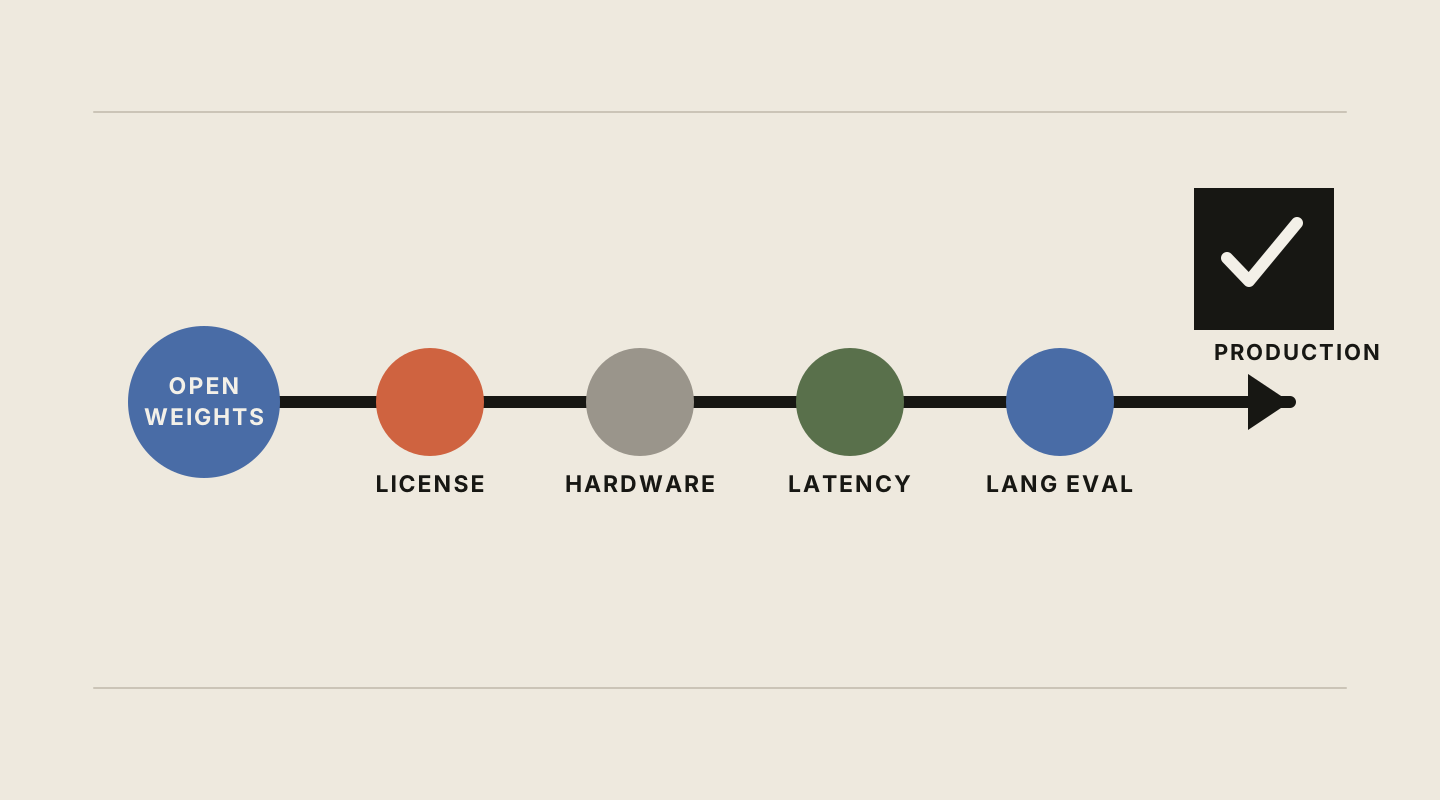
Open weights create more control, but they also move more responsibility onto the implementing team. As models and context windows grow, hardware, serving, data security, and evaluation demands grow with them.
Two releases worth tracking
Thinking Machines Lab announced Inkling-Small, a 276B-total and 12B-active MoE with up to a 1M-token context window and native audio and image reasoning. LG AI Research announced K-EXAONE 2.0, a 750B-parameter Apache 2.0 model supporting 10 languages, including Vietnamese.
Those specifications make both models reasonable research candidates. They do not tell a team how much VRAM a useful configuration will require, what throughput it can sustain, how consistently it handles Vietnamese, or whether the complete serving cost is acceptable.
The gate before downloading weights
A responsible trial should define:
- licensing, redistribution rights, and commercial-use conditions;
- weight provenance, checksums, and version-update policy;
- target VRAM, precision, quantization, latency, and throughput;
- Vietnamese evaluations built around the real domain and failure modes;
- data boundaries, logging, and deletion of sensitive artifacts.
The first trial should be offline and use non-sensitive data. Connection to a live system should wait until both quality and infrastructure footprint are understood.
What the evidence does not prove
Benchmark and efficiency comparisons remain publisher claims. Apache 2.0 is a useful licensing signal for K-EXAONE, but it does not replace review of the model card, dependencies, and downstream product obligations.
Action this week
Create one model-intake sheet for both candidates covering licensing, hardware, latency targets, three Vietnamese evaluation sets, and stop criteria. Keep credentials and user data out of the first environment.