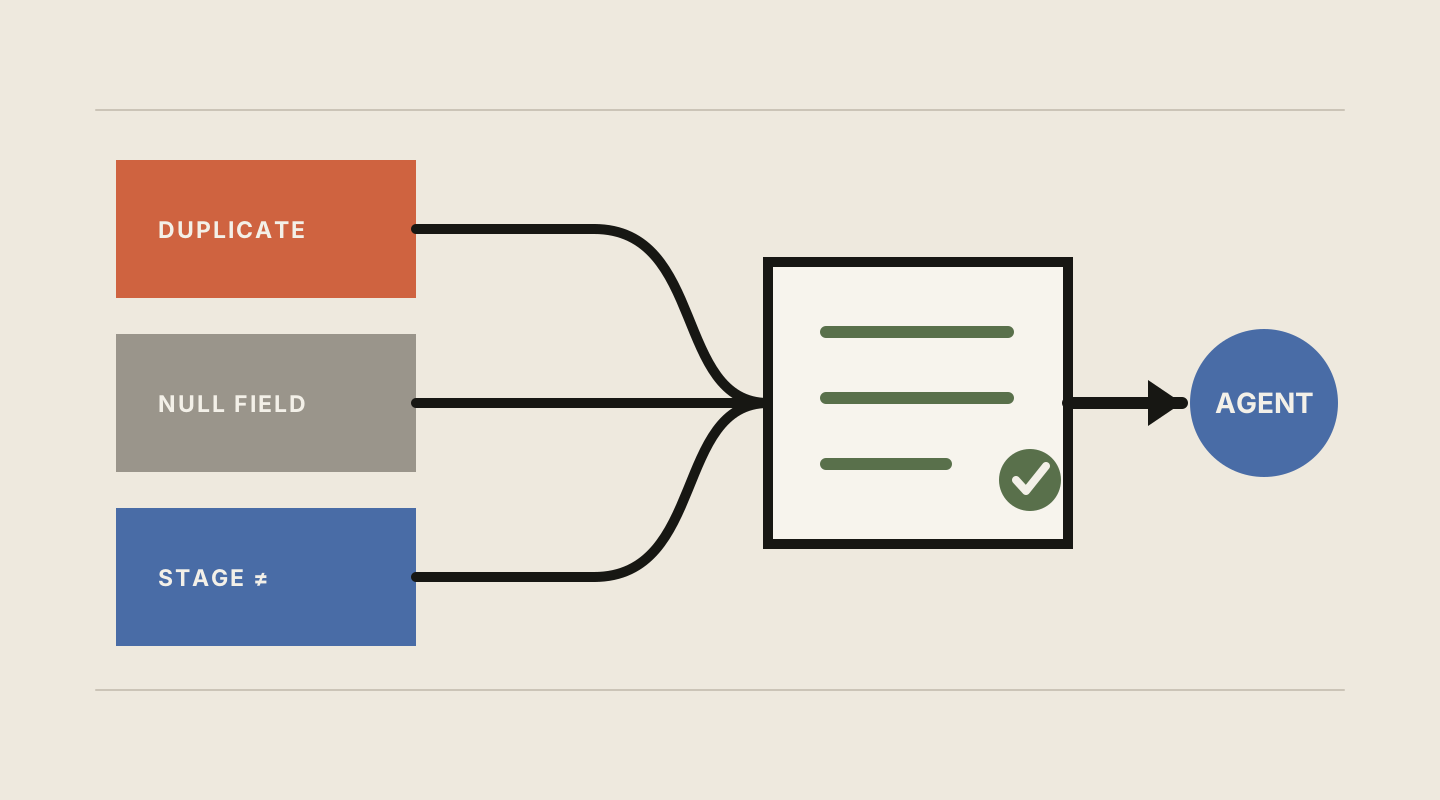
A sales agent may write emails quickly and summarize accounts well. If the CRM contains duplicates, inconsistent stages, or missing decision fields, the agent will produce fluent output from an unreliable knowledge system.
Adoption does not erase data debt
Salesforce’s 2026 State of Sales says 87% of sales organizations use AI and 54% of sellers have used agents. At the same time, 51% of respondents say disconnected data slows AI initiatives, and 74% are prioritizing data cleansing.
G2’s 2026 Buyer Behavior report shows AI chatbots playing a larger role in discovery, while review sites and verifiable proof still shape shortlists. Data quality therefore matters inside the CRM and across the documentation and product pages that buyers and AI systems read.
The minimum data contract
Before an agent prioritizes leads or forecasts pipeline, define:
- one meaning for stage, close date, and qualified lead;
- clear ownership for accounts, contacts, and next actions;
- required fields and rules for missing values;
- duplicate resolution and change history;
- approved public sources for enriching context.
The agent should link back to the source record and original evidence. Material changes need reviewer identity and before-and-after values instead of silent overwrites.
What the evidence does not prove
Adoption and data-cleansing priorities are self-reported survey results. They do not prove that one product will increase win rate or forecasting accuracy for every sales team.
Action this week
Choose one critical CRM object, remove duplicates, enforce three required fields, and measure usable-record coverage. Test the agent only on compliant records, then compare its result with the manual baseline.