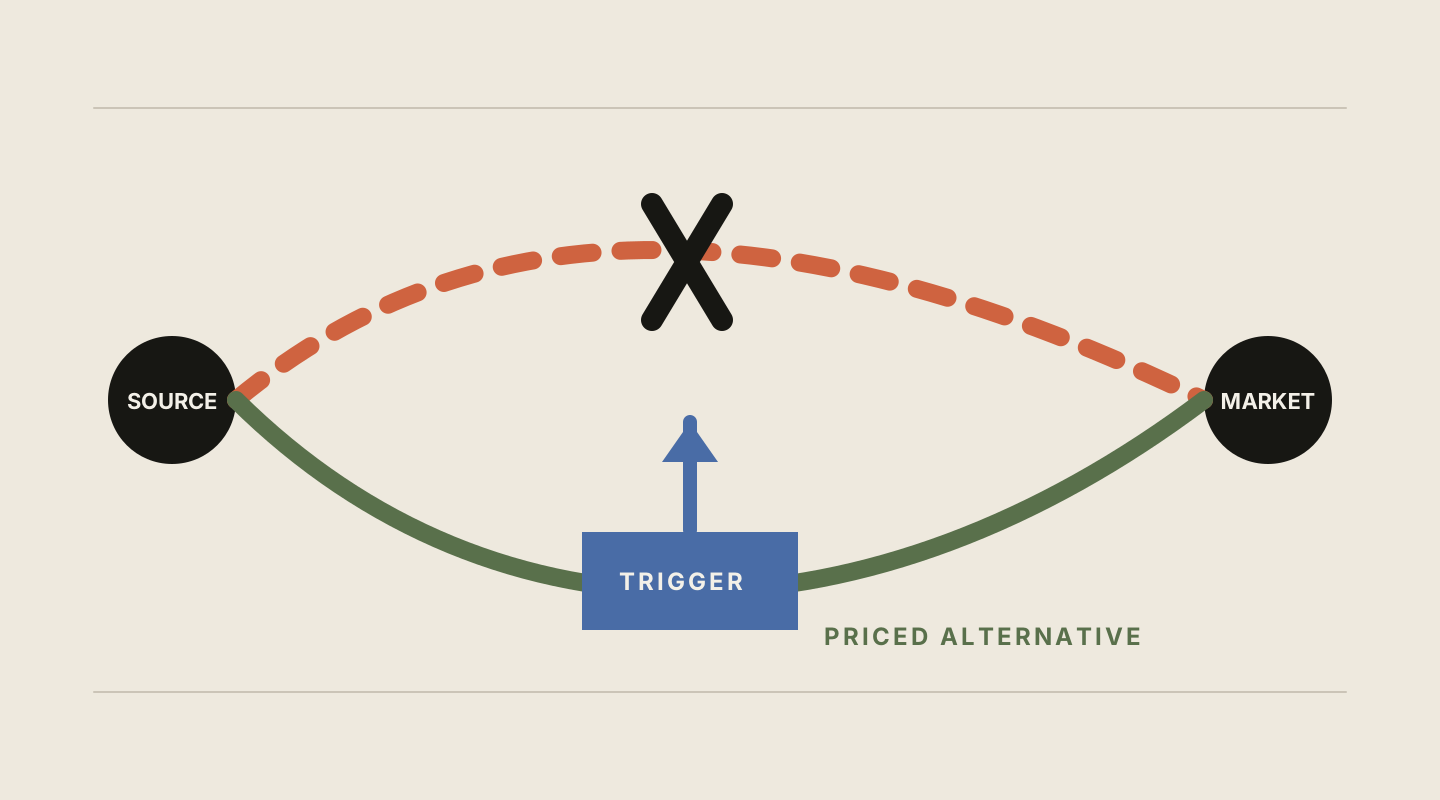
A transport disruption often appears first in a freight quote or lead-time alert. If only the logistics team sees the signal, the company may respond after margin, service level, or revenue has already moved.
Move the risk into the operating review
The World Bank projects 6.8% growth for Vietnam in 2026 while warning about oil shocks, weaker external demand, and high trade exposure. This is a macro scenario, but it identifies variables that belong in a company’s risk register.
A report on Hormuz and Red Sea disruption says rerouting around the Cape of Good Hope can add 10-14 days, while its HCMC-Dubai example reached US$7,385 per FEU. The price can change quickly. The failure pattern is more durable: extra lead time, container shortages, and surcharges can compound.
Turn warnings into decision rules
Every critical input or lane needs:
- the disruption level that threatens revenue or service;
- a priced source, route, or transport-mode alternative;
- an owner authorized to switch route or supplier;
- relevant Incoterms, surcharge clauses, and lead-time buffers;
- a working-capital limit for earlier buying or higher safety stock.
Use measurable triggers, such as a surcharge threshold or ETA delay. If every route switch restarts the decision from zero, the contingency exists only on a slide.
What the evidence does not prove
The World Bank outlook is not a revenue forecast. The HCMC-Dubai figure is route- and time-specific and should not become a long-term rate assumption for every cargo type.
Action this week
Choose three inputs or lanes whose disruption would stop revenue. For each, record the trigger, owner, alternative supplier or route, incremental cost, and activation time.